
Springer
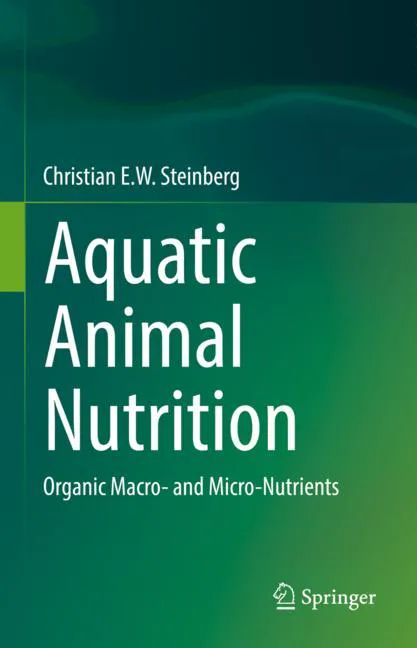
Aquatic Animal Nutrition
Alin havaittu hinta
Hinnat kaupoissa
1 tarjousHinnat ovat viimeksi havaittuja. Tarkista ajantasainen hinta, saatavuus ja toimituskulut kaupasta.
Hintahistoria
1 hintahavaintoKaavio näyttää kunkin havaintopäivän alimman tallennetun tuotehinnan. Havaintojen välistä hintaa ei ole vahvistettu.
Hinta nyt 241,99 €. Alin havaittu 241,99 €, korkein 241,99 €.
- Alin havaittu
- 241,99 €
- Korkein havaittu
- 241,99 €
- Viimeisin historian havainto
Näytä hintahavainto
| Hinta havaittu (Suomen aika) | Hinta |
|---|---|
| 241,99 € |
Tuotetiedot
As sequel to Aquatic Animal Nutrition – A Mechanistic Perspective from Individuals to Generations, the present treatise on organic macro- and micronutrients continues the unique cross fertilization of aquatic ecology/ecophysiology and aquaculture. This treatise considers proteins and their constituents, carbohydrates from mono- to polysaccharides, fatty acids from free acids to fat, and waxes. It becomes obvious that these organic nutrients are more than only simple fuel for the metabolism of animals; rather, their constituents have messenger and controlling function for the actual consuming individual and even for succeeding generations. This aspect will become particularly clear by putting the organisms under consideration back into their ecosystem with their interrelationships and interdependencies. Furthermore, micronutrients, such as vitamins and nucleotides as well as exogenous enzymes, are in the focus of this volume with known and still-to-be-discovered controlling physiological and biomolecular functions. Aquatic Animal Nutrition – Organic Macro and Micro Nutrients addresses several gaps in nutritional research and practice. One major gap is the lack of common research standards and protocols for nutritional studies so that virtually incomparable approaches have to be compared. This applies also to the studied animals, since most approaches disregard intraspecific variabilities and the existence of epimutations in farmed individuals. Furthermore, recalling the Mechanistic Perspective from Individuals to Generations, dietary benefits and deficiencies have effects on succeeding generations. In most studies, this long-term and sustainable aspect is overruled by pure short-term production aspects. By comparing nutritional behavior and success of fishes and invertebrates, Aquatic Animal Nutrition points out different metabolic pathways in these animal groups and discusses how, for instance, fishes would benefit when having some successful metabolic pathway of invertebrates. Application of novel genetic techniques will help turn this vision into reality. However, a widely missing link in the current nutritional research is epigenetics regarding transgenerational heritages of acquired morphological and physiological properties. To increase public acceptance, nutritional optimization of farmed animals based on this mechanism, rather than genetical engineering, appears promising.
- Brändi
- Springer
- EAN / GTIN
- 9783030872267