
Springer
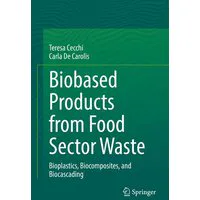
Biobased Products from Food Sector Waste
Alin havaittu hinta
Hinnat kaupoissa
1 tarjousHinnat ovat viimeksi havaittuja. Tarkista ajantasainen hinta, saatavuus ja toimituskulut kaupasta.
Hintahistoria
1 hintahavaintoKaavio näyttää kunkin havaintopäivän alimman tallennetun tuotehinnan. Havaintojen välistä hintaa ei ole vahvistettu.
Hinta nyt 96,29 €. 30 päivän havaittu alin 96,29 €. 90 päivän havaittu alin 96,29 €. Hinta nyt on 0 % sama kuin 90 päivän havaittujen päiväminimien keskiarvo.
- Alin havaittu
- 96,29 €
- Korkein havaittu
- 96,29 €
- Viimeisin historian havainto
Näytä hintahavainto
| Hinta havaittu (Suomen aika) | Hinta |
|---|---|
| 96,29 € |
Tuotetiedot
In the past, food waste has been used to produce biogas and biofuels, fertilizers, and animal feed. Using it as a feedstock for innovative biorefineries is not only an ethical issue but also a smart application of the circular economy. This book explores the zero-waste concept in the thriving biobased sector, proposing technologies and procedures to meet the sustainable development goals. The volume categorizes food waste sources and proposes an impressive number of high value-added compounds (e.g., platform chemicals, enzymes, nutraceuticals, antioxidants, organic acids, phosphate, bioadsorbents, pectin, solvents, and pigments) that can be obtained in a sequential biocascade, via chemical, biochemical, thermal, and physical technologies. The synthesis of bioplastics from food waste, their copolymerization and blending, as well as the production of biocomposites and bionanocomposite with biofillers from food scraps, are presented: eluding the cost of waste disposal, reducing biobased materials price, and avoiding using edible resources as a starting material for biobased items are the main beneficial peculiarities of the process. The Authors illustrate challenging characteristics of new biobased materials, such as their mechanical and physico-chemical features, their biodegradability, compostability, recyclability, chemical compatibility, and barrier properties. The volume also delves into socioeconomic considerations and environmental concerns related to the upcycling of food waste, as well as the safety and life cycle assessment of biobased products. Finally, the authors address how advances in digital technology can make food waste upcycling a negative-cost process and discuss best practices to practically implement the biorefinery concept. Research gaps and needs are suggested, and recommendations for food waste handling and management during this COVID-19 pandemic are provided.
- Brändi
- Springer
- EAN / GTIN
- 9783030634360