
Springer
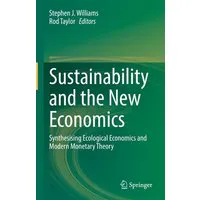
Sustainability and the New Economics
Alin havaittu hinta
Hinnat kaupoissa
1 tarjousHinnat ovat viimeksi havaittuja. Tarkista ajantasainen hinta, saatavuus ja toimituskulut kaupasta.
Hintahistoria
1 hintahavaintoKaavio näyttää kunkin havaintopäivän alimman tallennetun tuotehinnan. Havaintojen välistä hintaa ei ole vahvistettu.
Hinta nyt 128,39 €. Alin havaittu 128,39 €, korkein 128,39 €.
- Alin havaittu
- 128,39 €
- Korkein havaittu
- 128,39 €
- Viimeisin historian havainto
Näytä hintahavainto
| Hinta havaittu (Suomen aika) | Hinta |
|---|---|
| 128,39 € |
Tuotetiedot
This multidisciplinary book provides new insights and hope for sustainable prosperity given recent developments in economics – but only if swift and strong actions consistent with Earth’s biophysical limits and principles of justice are universally taken. It is one thing to put limits on resource throughput and waste generation to conform with the ecosphere’s biocapacity. It is another thing to efficiently allocate a sustainable rate of resource throughput and ensure it is equitably distributed in the form of final goods and services. While the separate but interdependent decisions regarding throughput, distribution, and allocation are the essence of ecological economics, dealing with them in a world that needs to cure its growth addiction requires a realistic understanding of macroeconomics and the fiscal capacity of currency-issuing central governments. Sustainable prosperity demands that we harness this understanding to carefully regulate the rate of resource throughput and manipulate macroeconomic outcomes to facilitate human flourishing. The book begins by outlining humanity’s current predicament of gross ecological overshoot and laments the half-century of missed opportunities since The Limits to Growth (1972). What was once economic growth has become, in many high-income countries, uneconomic growth (additional costs exceeding additional benefits), which is no longer advancing wellbeing. Meanwhile, low-income nations need a dose of efficient and equitable growth to escape poverty while protecting their environments and the global commons. The book argues for a synthesis of our increasing knowledge of the ecosphere’s limited carrying capacity and the power of governments to harness, transform, and distribute resources for the common good. Central to this synthesis must be a correct understanding of the difference between financial constraints and real resource constraints. While the latter apply to everyone, the former do not apply to currency-issuing central governments, which have much more capacity for corrective action than mainstream thinking perceives. The book joins the growing chorus of authoritative voices calling for a complete overhaul of the dominant economic system. We conclude with policy recommendations based on a new economics that, if implemented, would come close to guaranteeing a sustainable and prosperous future. Upon reading this book, at least one thing should be crystal clear: business as usual is not a viable option.
- Brändi
- Springer
- EAN / GTIN
- 9783030787950