
Springer
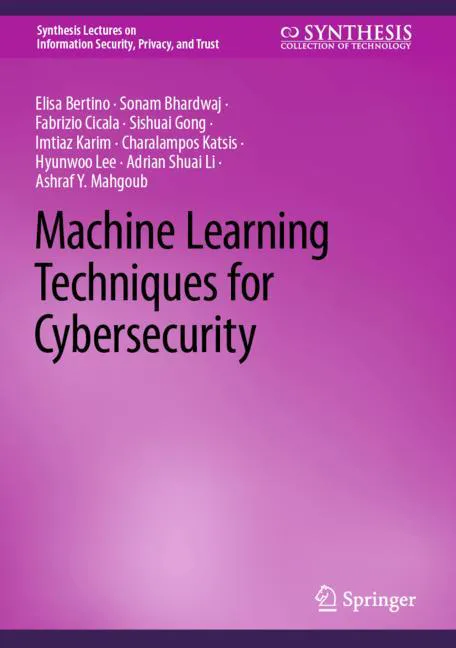
Machine Learning Techniques for Cybersecurity
Lowest observed price
Prices at stores
1 offerPrices are the most recently observed prices. Check the current price, availability and delivery costs at the store.
Price history
1 price observationThe chart shows the lowest recorded product price on each observation day. Prices between observations have not been verified.
- Lowest observed
- €49.49
- Highest observed
- €49.49
- Latest history observation
Show price observation
| Price observed (Finnish time) | Price |
|---|---|
| €49.49 |
Product details
This book explores machine learning (ML) defenses against the many cyberattacks that make our workplaces, schools, private residences, and critical infrastructures vulnerable as a consequence of the dramatic increase in botnets, data ransom, system and network denials of service, sabotage, and data theft attacks. The use of ML techniques for security tasks has been steadily increasing in research and also in practice over the last 10 years. Covering efforts to devise more effective defenses, the book explores security solutions that leverage machine learning (ML) techniques that have recently grown in feasibility thanks to significant advances in ML combined with big data collection and analysis capabilities. Since the use of ML entails understanding which techniques can be best used for specific tasks to ensure comprehensive security, the book provides an overview of the current state of the art of ML techniques for security and a detailed taxonomy of security tasks and corresponding ML techniques that can be used for each task. It also covers challenges for the use of ML for security tasks and outlines research directions. While many recent papers have proposed approaches for specific tasks, such as software security analysis and anomaly detection, these approaches differ in many aspects, such as with respect to the types of features in the model and the dataset used for training the models. In a way that no other available work does, this book provides readers with a comprehensive view of the complex area of ML for security, explains its challenges, and highlights areas for future research. This book is relevant to graduate students in computer science and engineering as well as information systems studies, and will also be useful to researchers and practitioners who work in the area of ML techniques for security tasks.
- Brand
- Springer
- EAN / GTIN
- 9783031282584